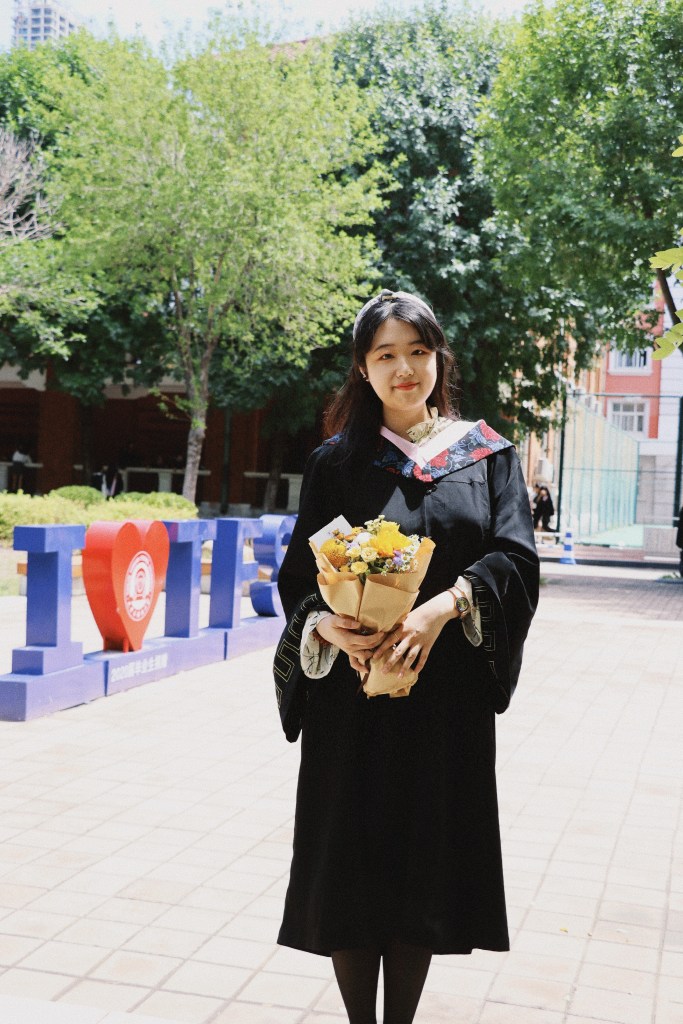
Meng Chen (China)
Master’s Student (Oct 2022-Sep 2024), International Peace and Co-existence Program, Graduate School of Humanities and Social Sciences
Thesis Title: Environmental Cooperation between China and Pakistan in the Context of the Belt and Road Initiative
Hobbies: swimming, music, drawing, watching figure skating
Quote of peace: “Human hope is like an eternal star, dark clouds can’t cover up its light. Especially today, peace is not an ideal, a dream, it is the wish of ten thousand people.” – Ba Jin
“After my undergraduate university, I had about six months of work experience. My busy work made me realize that the world is vast, but my knowledge reserve is small. I want to enrich my mind and understand the world more clearly. In a globalized world, peace and conflict are hot topics. I expect that through my studies at Hiroshima University I will be able to contribute to the development of peace for humanity. Hiroshima University is a famous university with excellent faculty. Unlike the noisy metropolis, Hiroshima University has beautiful natural scenery and a tranquil environment, where you can concentrate on your studies.”
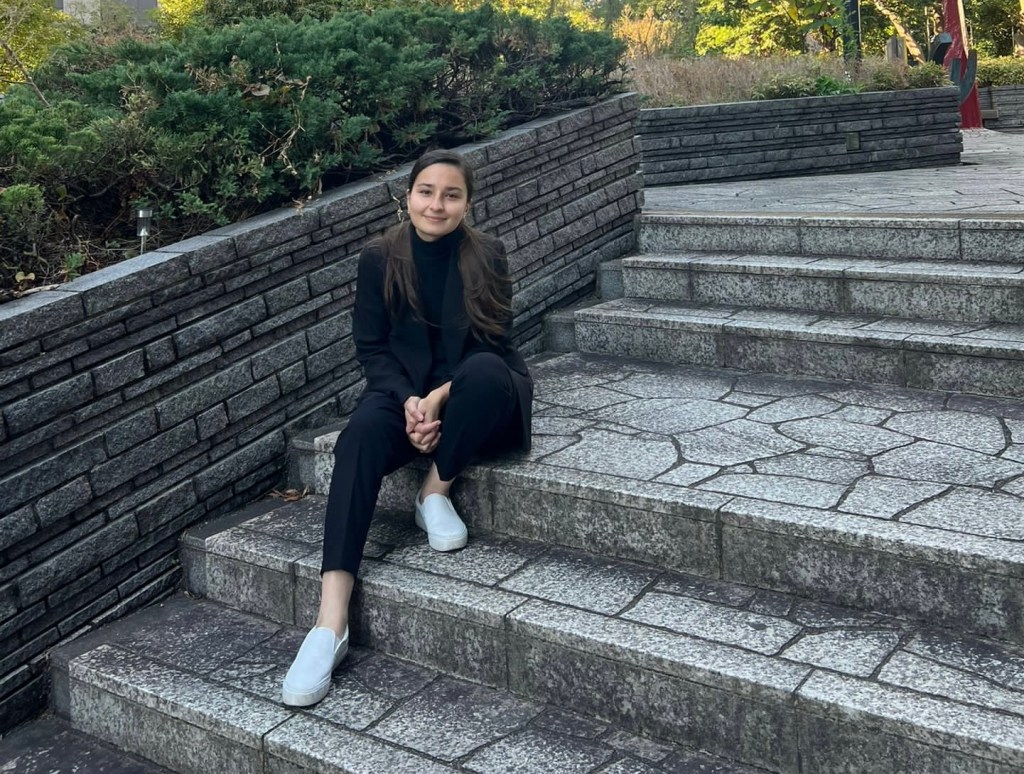
Faribo Idibekzoda (Tajikistan)
Master’s Student (Oct 2022-Sep 2024), International Peace and Co-existence Program, Graduate School of Humanities and Social Sciences
Research topic: Comparative analysis of the implementation of environmental SDGs in Tajikistan and Japan
Hobbies: reading and never getting tired of endless books on geopolitics and geoeconomics, international security, and diplomacy
Quote of peace: “Do unto others as you would have them do unto you” – the simplest universal golden rule, also known as the Law of Reciprocity, found in the tenets of most religions. It is only through mutual respect among people of different faiths and cultures that we can coexist in peace without wars and causing suffering to each other.
“After completing my BS in International Relations, I interned in Tajikistan at the Ministry of Foreign Affairs (MFA), UNICEF, and the World Bank. Through these internships, I became familiar with how international organizations operate in Tajikistan on a regional and individual levels. I also obtained valuable professional skills in public affairs and public outreach. Before coming to Hiroshima University, I worked for two years at the MFA of Tajikistan. After my studies, I will go back to my country to implement all experiences I gained.
Hiroshima University, particularly the International Peace and Co-existence Program, is the best to enroll for those interested in peace and peacebuilding. Students become equipped not only with the theoretical aspect of International Relations but also with practical skills. Hiroshima University is a comfortable place to live and study, with good and supportive professors and supervisors, making the learning process more enjoyable.”

Vrajesh Rawal (India)
Master’s Student (Apr 2023-Mar 2025), International Peace and Co-existence Program, Graduate School of Humanities and Social Sciences
Research topic: Transformative economic policies in India: A political economy analysis of sectoral shifts and political transitions
Hobbies: keeping up-to-date with news and analysis on geopolitics, security, and diplomacy
Quote of peace: “Peace is not merely a distant goal that we seek, but a means by which we arrive at that goal.” – Subhas Chandra Bose
“Upon completing my undergraduate degree in International Relations, I secured internships at the Embassies of Bosnia and Herzegovina and Moldova in Japan, which provided me with a comprehensive understanding of how international organizations operate at the embassy level and enabled me to develop my communication and diplomacy skills. I was drawn to the International Peace and Co-existence Program at Hiroshima University because of its excellent academic reputation and experienced faculty members. The program is providing me with a conducive environment to gain theoretical and practical skills to address issues related to peace and conflict, guided by knowledgeable professors who are dedicated to nurturing their students’ potential. Their supportive approach to teaching and learning has made the learning process not only enjoyable but also impactful. It is my wish that with the skills I acquire from this program, I could contribute meaningfully to the promotion of peace and stability and make a positive impact in my community.”

Peace Chinaza Nwigwe (Nigeria)
Master’s Student (Apr 2023-Mar 2025), Social Innovation Science, Graduate School of Innovation and Practice for Smart Society
Research topic: Resource conflicts in Nigeria: challenges to peace and sustainability
Hobbies: swimming, drawing, arts and crafts, traveling, photography, volunteering and hair styling
Quote of peace: “Peace cannot be kept by force; it can only be achieved by understanding.” – Albert Einstein
“I choose to study in the Graduate School of Innovation and Practice for Smart Society because of my desire to build a career in strategic peacebuilding through educational and innovative ways of dealing with conflicts. In achieving my academic goals and dream career, I chose Hiroshima University because of its reputation in terms of excellent facilities, learning support, friendly campus, internationally oriented curriculum, and competent faculty. After my master’s course, I plan to further into the doctoral course in peacebuilding and develop my skills and acquire more knowledge that will equip me to become a global peace ambassador. The experience and knowledge gained during my research will be directed towards developing solutions for solving some of the global problems, especially in developing countries in Africa and the rest of the world. I am hoping to apply the knowledge gained from Hiroshima University in reality by formulating policies that are both feasible and effective in maintaining and solving the complex and diverse conflict issues facing humanity.”
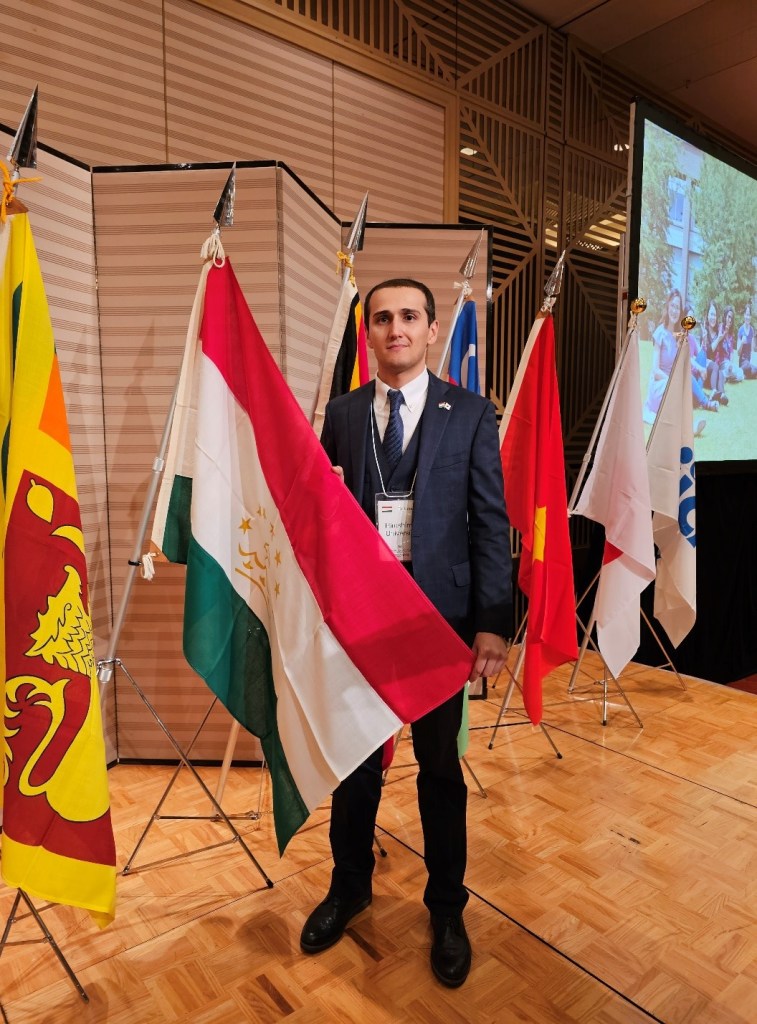
Bezhan Firuzzoda (Tajikistan)
Master’s Student (Oct 2023-Sep 2025), International Peace and Co-existence Program, Graduate School of Humanities and Social Sciences
Research topic: Environmental Diplomacy in Central Asia
Hobbies: following the news from around the world, table tennis, and watching documentary films
Quote of peace: “Human Beings are members of a whole, in creation of one essence and soul. If one member is inflicted with pain, other members uneasy will remain. If you have no sympathy for human pain, the name of human you shall not retain.” – Saadi Shirazi
“There is a quote from Benjamin Franklin that says: ‘An investment in knowledge pays the best interest.’ The reason I chose to study at the Graduate School of Humanities and Social Sciences of Hiroshima University is my decision to once again invest in my knowledge, which I hope will pay me a good “interest” in the form of reaching new career heights at foreign service. Before joining Hiroshima University under the JDS Program of Japan, I worked at the Ministry of Foreign Affairs of Tajikistan for several years. Based on the “open door” policy, my country has developed a distinctive diplomatic approach, establishing mutually beneficial cooperation with most countries worldwide. Also today, Tajikistan is actively involved in solving regional and global problems, especially those related to water and climate. Since one of the main directions of my country’s foreign policy is environmental diplomacy, during my research work at HU, I intend to study environmental peacebuilding, with a particular focus on Central Asia. I am confident that the knowledge I acquire will help me, as a diplomat, contribute to the implementation of my country’s foreign policy goals.”

Shotaro Akehira (Japan/Philippines)
Master’s Student (Oct 2023–Sep 2025), International Peace and Co-existence Program, Graduate School of Humanities and Social Sciences
Research topic: Community Rebuilding during Post-Environmental Disasters in Coastal Areas of Samar, Philippines
Hobbies: strategy games, geography trivias, and public speaking
Quote of peace: “If you stick a knife in my back nine inches and pull it out six inches, there’s no progress. If you pull it all the way out, that’s not progress. The progress is healing the wound that the blow made. And they won’t even admit the knife is there.” – Malcolm X
“I graduated from the University of Santo Tomas in the Philippines with a Bachelor’s Degree in Economics. During my undergraduate studies, I noticed a heavy emphasis on the quantitative aspects of economics—focusing on numbers and statistical outcomes—while the social and human consequences often remained overlooked. By my junior year, I recognized this gap and developed a desire to pursue further studies to bridge my understanding of the interplay between economic systems and their human implications. My introduction to Hiroshima University’s International Peace and Co-existence Program was a lucky coincidence. While learning about the Filipino community near my father’s workplace, I discovered the program. Peace studies was a relatively foreign concept to me, but under the guidance of my adviser, Professor Dahlia Simangan, and other members of the program, I realized that this field answers the knowledge gaps I encountered during my undergraduate years. Currently in my second year, I have had the opportunity to take courses across various fields, including tourism, sustainability, and international relations. These interdisciplinary studies have significantly developed my research and personal growth. Hiroshima University, particularly the Graduate School of Humanities and Social Sciences, emphasizes peace, sustainability, and diversity, enabling students to broaden their perspectives and contribute to fostering positive change (and peace). I deeply value my experience at the university under Professor Dahlia Simangan’s supervision and aim to apply what I have learned to contribute meaningfully as an aspiring academic and educator.”
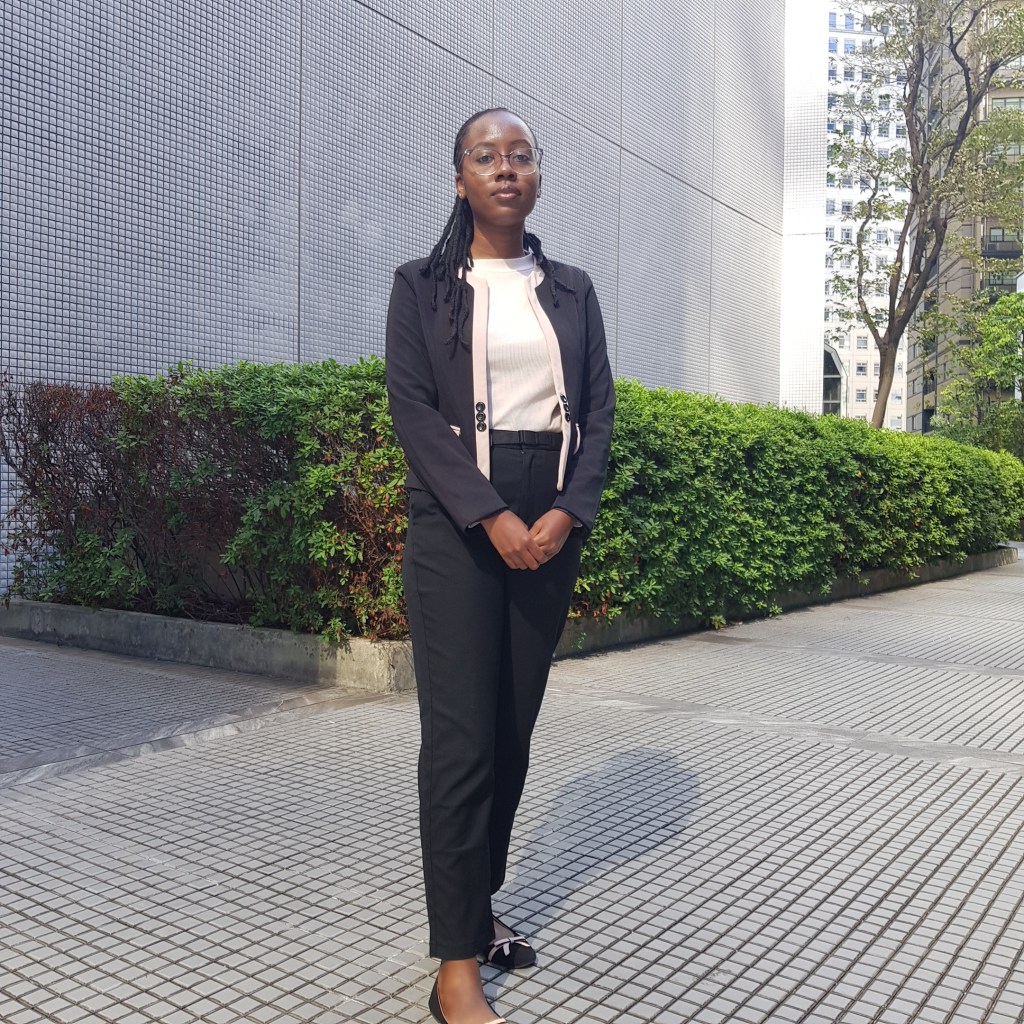
Diana Chebet Rotich (Kenya)
Master’s Student (Apr 2024-Mar 2026), International Peace and Co-existence Program, Graduate School of Humanities and Social Sciences
Research topic: The Influence of Kenya’s Border Security Policies on the EAC’s Response to Transnational Terrorism: A Case Study of the Kenya-Somalia Border
Hobbies: enthusiast of athletics and architectural design
Quote of peace: “It is not enough to win a war; it is more important to organize the peace.” – Aristotle
“For my undergraduate, I did a bachelor’s degree in International Relations at the United States International University – Nairobi. During this time I realised that I needed to further my studies to hone my skills in research and also find my niche in this vast world of international relations. I chose to do the peace and international co-existence program at Hiroshima because it gave me exactly what I was looking for: a well-respected institution, brilliant lecturers with relevant research in my area of interest, as well as easily accessible information from the libraries that I have access to on campus and online. After gaining my master’s degree from Hiroshima University, I would like to apply my newly acquired knowledge by engaging relevant players in international relations in my country, such as the Ministry of Foreign Affairs. I can also use my research skills by working with non-governmental institutions that focus on regional Integration.”
Visiting Student

Liliana Cabrera Meza (Mexico)
Special research student (Nov 2025), International Peace and Co-existence Program, Graduate School of Humanities and Social Sciences
Research topic: Water as a strategic resource in the 21st century: The case of the Guarani Aquifer
Hobbies: going for a walk, swimming, reading books with my children
Quote of peace: “An ignorant people is a blind instrument of its own destruction; educating it is ensuring peace.” – Simón Bolívar
“I am currently studying for a Master’s degree in International Relations at the Universidad Autonoma Metropolitana, Xochimilco campus, and I came to Hiroshima University to enrich a chapter of my research that reflects on the possibility of a conflict over the control of water from the Guarani Aquifer, since this natural resource has reinforced its strategic character in this century, as the world faces a time of water stress that keeps the international community on alert.
I want to understand the chaotic, ever-changing, and complex international reality we live in. I also want to understand how the process of achieving peaceful conflict resolution and peacebuilding is conceived from a different perspective from the Latin American one. Therefore, I believe that Hiroshima University, characterized by its high-caliber academics and professors and by an environment with profound historical and moral significance, will allow me to connect conflict and peace theory with a living, tangible reality that inspires ethical reflection and social commitment.
Upon returning to Mexico, I will apply the knowledge and analytical tools acquired in the conclusion of my thesis, and I will pursue a PhD to deepen my understanding of the political, social, and economic problems in Latin America and in my country, but this time trying to go further and propose and build solutions for the well-being of society.”
 Dahlia Simangan